
Many SaaS founders burn thousands of dollars on pre-launch ads only to launch to the “sound of crickets,” resulting in sky-high customer acquisition costs (CAC) and a list of cold, unengaged emails. There is, however, a more effective way to build momentum.
Your waitlist shouldn’t be passive. It should be your first growth engine.
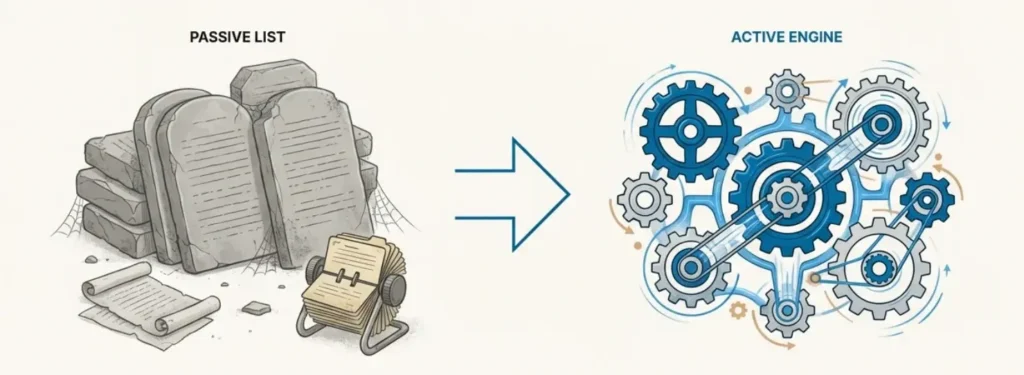
Instead of simply collecting emails in a digital filing cabinet, your goal is to build an army of people who have already invested social capital in your success before you even launch. You are moving from a “passive list” to an active growth engine.
The Viral Waitlist Blueprint
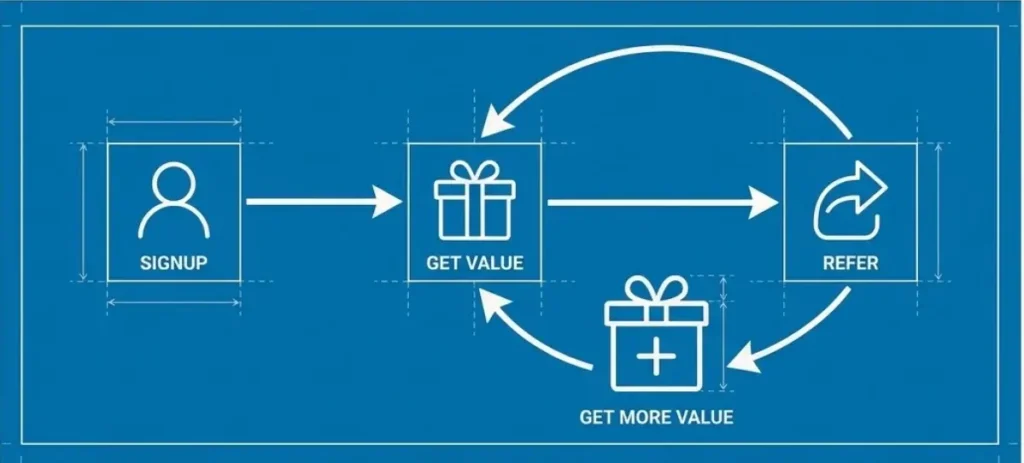
The core of this strategy is turning your waitlist into a referral engine by offering real, tangible value. Rather than promising vague future access, you should grant immediate, stackable rewards. The loop functions as follows:
• Signup: The user joins the list.
• Get Value: They receive an immediate reward.
• Refer: They share the product with others.
• Get More Value: They receive stackable rewards for their referrals.
Why This Actually Works: The Psychology of Tangible Value
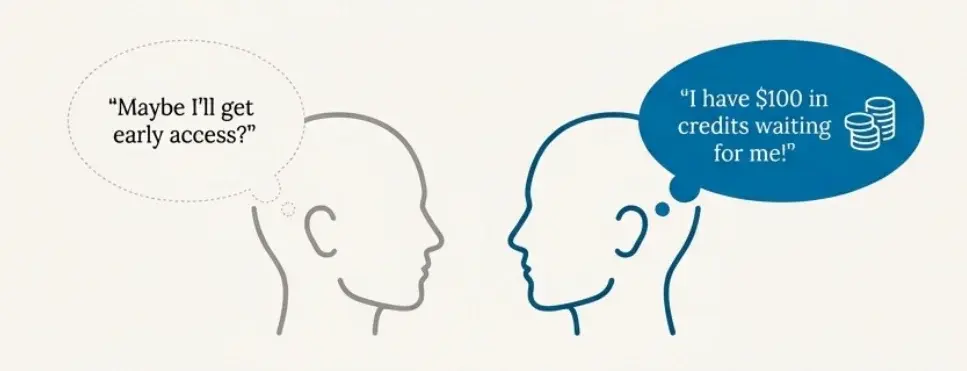
The blueprint works because it shifts the user’s mindset from “maybe I’ll get early access” to “I have $100 in credits waiting for me!“. This creates a powerful sense of ownership and loss aversion; the credits become a tangible asset the user doesn’t want to lose.
A famous example of this is Dropbox, which in 2008 grew from 100K to 4M users in just 15 months by using referral loops, with 35% of daily signups coming from referrals.
Anatomy of a Viral Offer
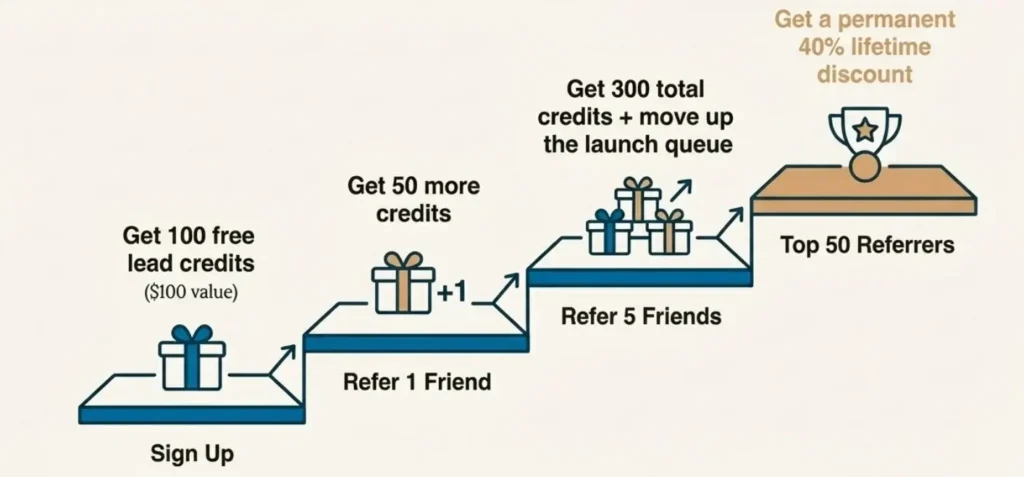
To create a viral offer, you must structure rewards that scale with user effort. For a hypothetical lead generation tool where 1 credit equals $1, the structure might look like this:
• Sign Up: Get 100 free lead credits ($100 value).
• Refer 1 Friend: Get 50 more credits.
• Refer 5 Friends: Get 300 total credits and move up the launch queue.
• Top 50 Referrers: Earn a permanent 40% lifetime discount.
Your Messaging is Everything
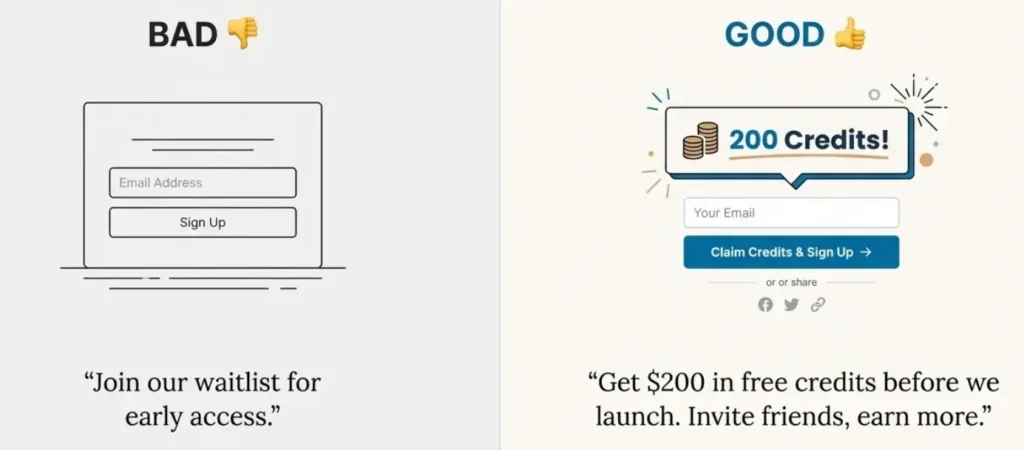
The way you frame your offer determines its success.
• Bad Messaging: “Join our waitlist for early access.” (Vague and uninspiring).
• Good Messaging: “Get $200 in free credits before we launch. Invite friends, earn more.” (Clear, valuable, and actionable).
The Blueprint in Action: Robinhood
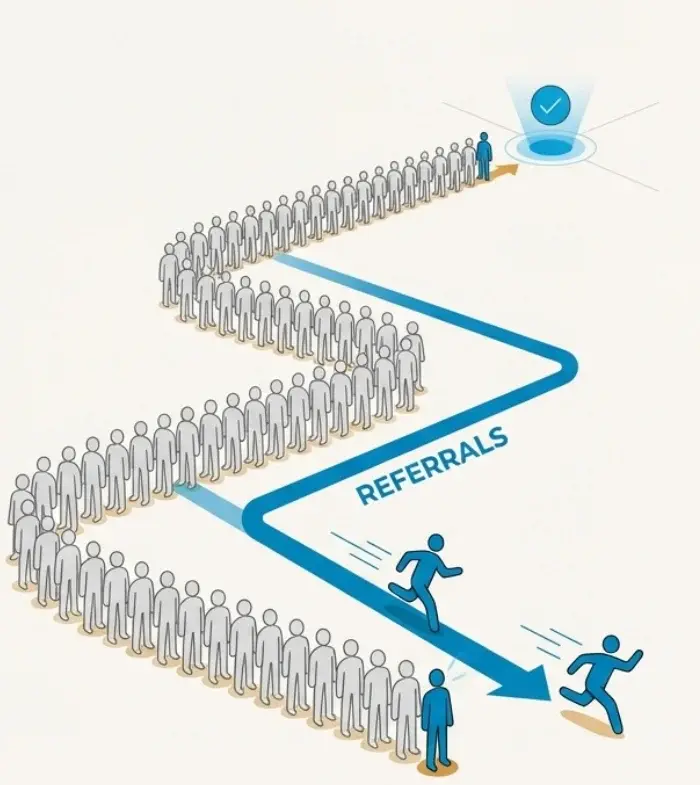
Robinhood famously built a waitlist of over 1 million people before launching a single feature. They achieved this by giving users priority access based on referrals, effectively gamifying the queue to create massive demand through non-monetary but highly valuable rewards.
The Math is Simple. The ROI is Massive.
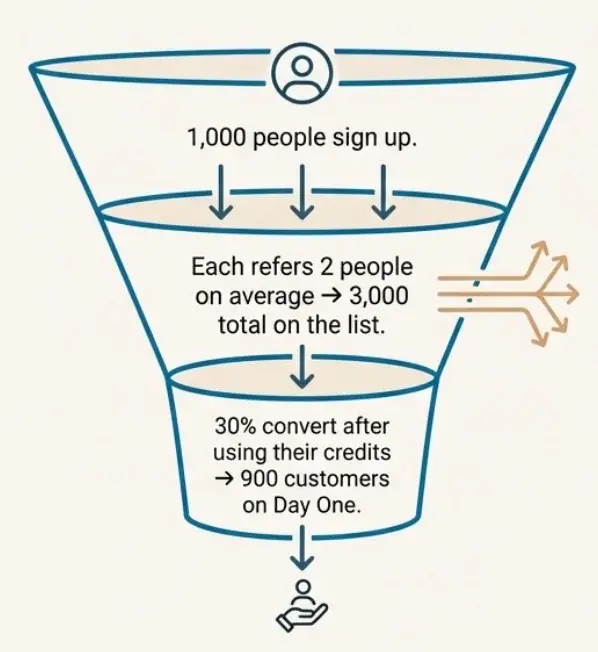
The financial benefit of a viral waitlist is clear when looking at the Bottom Line:
• Traditional Ads: Typical CAC ranges from $50 to $200 per customer.
• Viral Waitlist: Your CAC is essentially $0. Your only “cost” is the server cost of providing the credits, not a loss of actual revenue.
• The Multiplier: If 1,000 people sign up and each refers an average of 2 people, your list grows to 3,000. If 30% convert on Day One, you have 900 customers immediately.
Your Turn: A Plug-and-Play Template
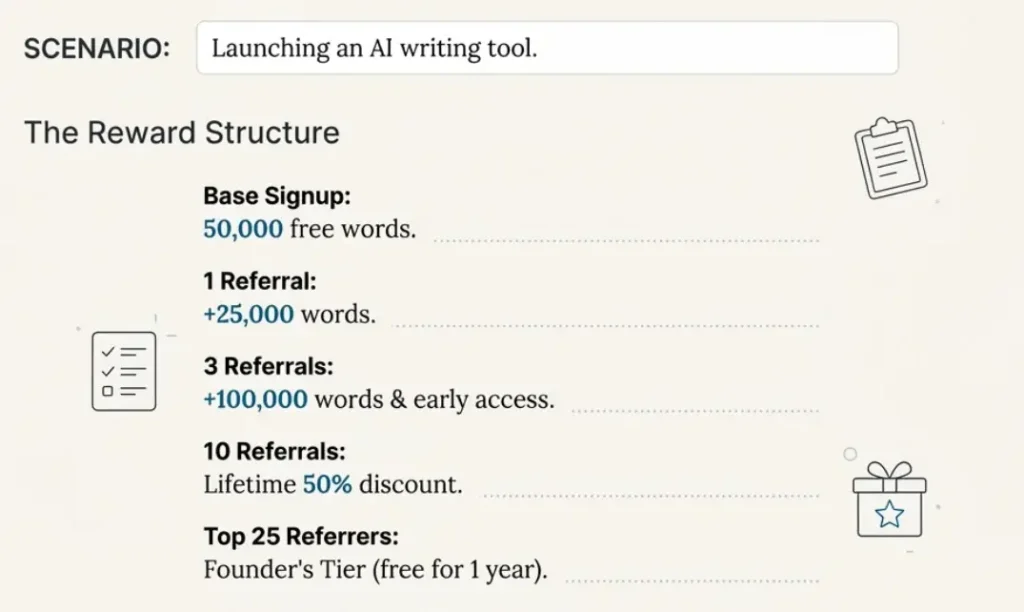
If you were launching an AI writing tool, your reward structure could follow this template:
• Base Signup: 50,000 free words.
• 1 Referral: +25,000 words.
• 3 Referrals: +100,000 words and early access.
• 10 Referrals: Lifetime 50% discount.
• Top 25 Referrers: Founder’s Tier (Free for 1 year).
The Tech Stack (Simplified)
You don’t need complex software to start. Your core components should include a simple landing page, a signup form that generates unique referral links, and a dashboard where users see their rewards stack up.
• Off-the-shelf tools: Viral Loops, KickoffLabs.
• DIY options: Typeform combined with Zapier.
• Pro-Tip: Always show a leaderboard, as competition is a powerful motivator.
Common Mistakes to Avoid
To ensure your waitlist doesn’t stall, avoid these pitfalls:
1. Small rewards: A 10% discount isn’t exciting enough to share.
2. No visible progress: Users need to see their rewards stack up in real-time.
3. Complicated sharing: If sharing isn’t one-click, it won’t work.
4. No social proof: Use leaderboards to trigger FOMO (Fear Of Missing Out).
5. Waiting too long: You should start your waitlist 2-3 months before your planned launch.
The 3-Month Countdown to a Massive Launch
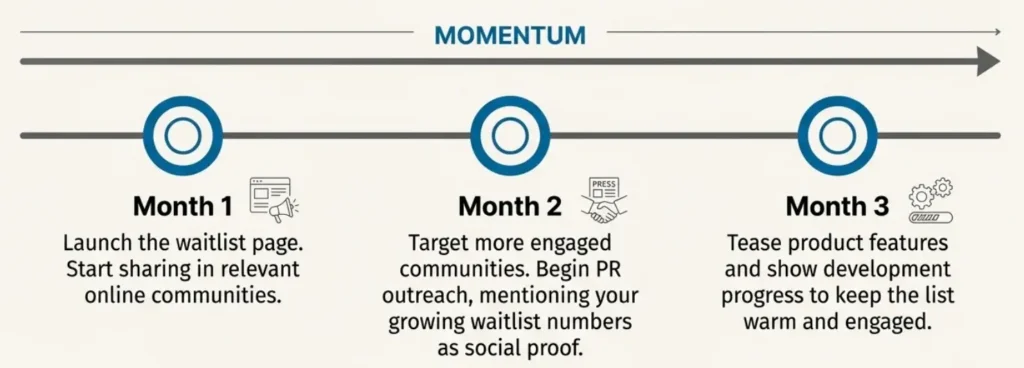
Build momentum with a structured timeline:
• Month 1: Launch the waitlist page and share it in relevant online communities.
• Month 2: Target more engaged communities and begin PR outreach, using your growing waitlist numbers as social proof.
• Month 3: Tease specific product features and show development progress to keep the list “warm” and engaged.
Bonus Move: The Scarcity Play
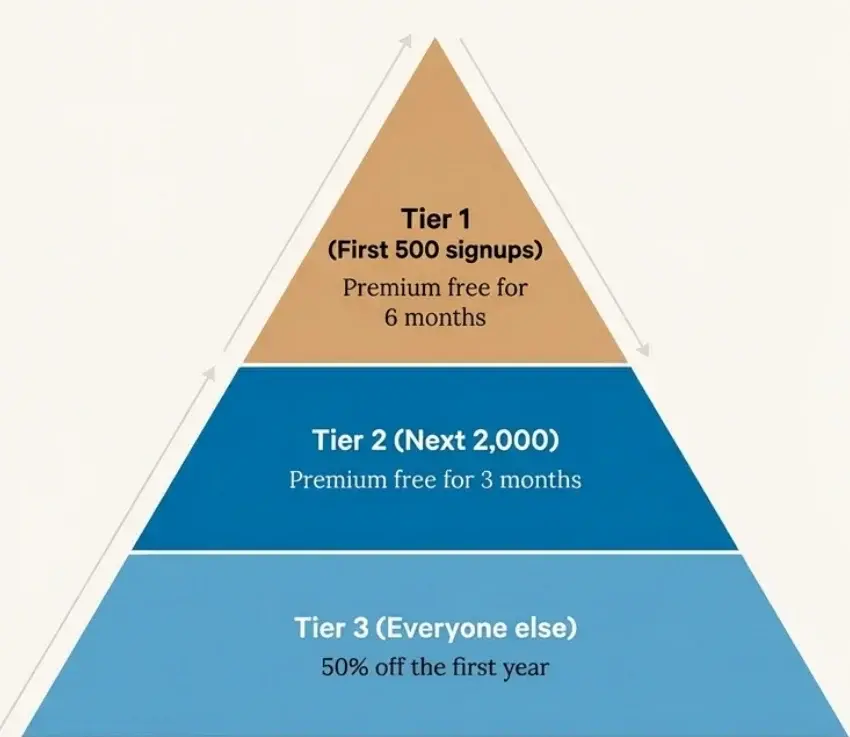
To drive even more urgency, create reward tiers based on when users join. Spotify used this for its US launch to make people share “like crazy”:
• Tier 1 (First 500): Premium free for 6 months.
• Tier 2 (Next 2,000): Premium free for 3 months.
• Tier 3 (Everyone else): 50% off the first year.
The Blueprint, Distilled
By launch day, you shouldn’t just have a list; you should have an army with “skin in the game” and credits “burning a hole in their pocket”. To achieve this, remember these four pillars:
1. Give Tangible Value: Offer real credits, not promises.
2. Incentivize Sharing: Provide more value for referrals.
3. Make it Visible: Show rewards and progress in real-time.
4. Make it a Game: Use leaderboards and tiers to drive competitio