
I’ve spent a lot of time observing and working with SaaS founders, and if there is one thing I have learned, it’s that your acquisition strategy has to evolve as your user count does. You cannot use Stage 3 tactics on a Stage 1 budget, or you’ll burn out before you ever find traction.
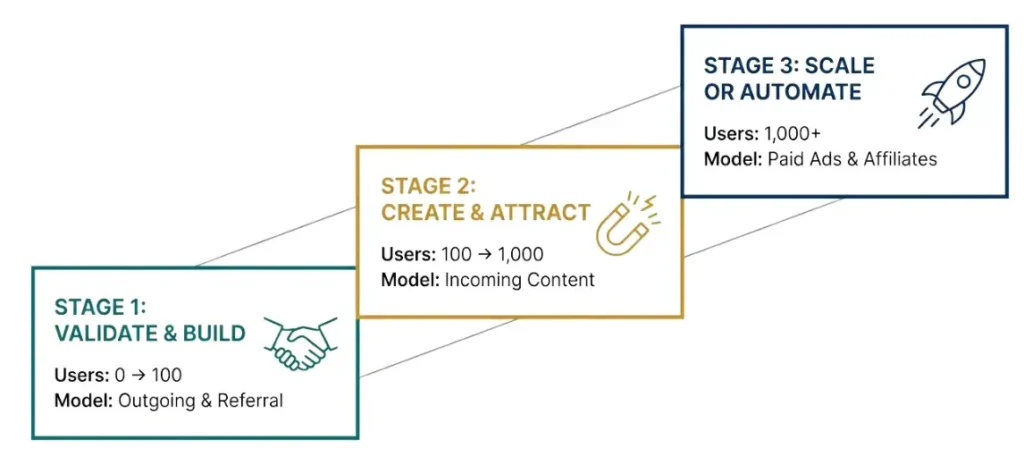
The Early Days: Hand-to-Hand Combat (0-100 Users)
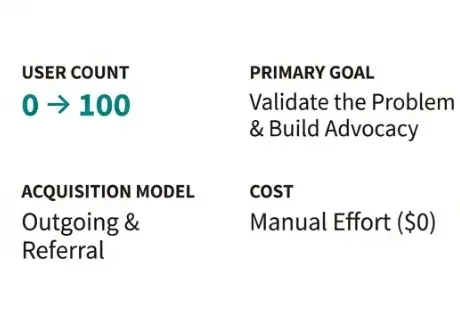
In the beginning, scaling is actually about doing things that don’t scale. I often tell founders that their first five users should come from “hand-to-hand combat”—direct, manual outreach to people they already know.
I remember one founder building a project management tool who spent his first week just DMing former colleagues and partners to tell them he had an MVP ready. He offered them free lifetime access in exchange for honest feedback, and it worked because those first users helped him find bugs and validate that he was actually solving a real problem.
Once you have those first few users, you have to treat them like royalty. I’ve noticed the most successful founders move these early adopters into a private Discord or WhatsApp community to serve them exceptionally well.
This turns them into a growth engine; if you treat them right, they will happily use referral links to invite others, especially if you offer their friends early-user discounts. At this stage, you don’t even necessarily need to pay them for these referrals—the organic momentum and exclusivity are often enough.
The Messy Middle: The Content Slog (100-1,000 Users)
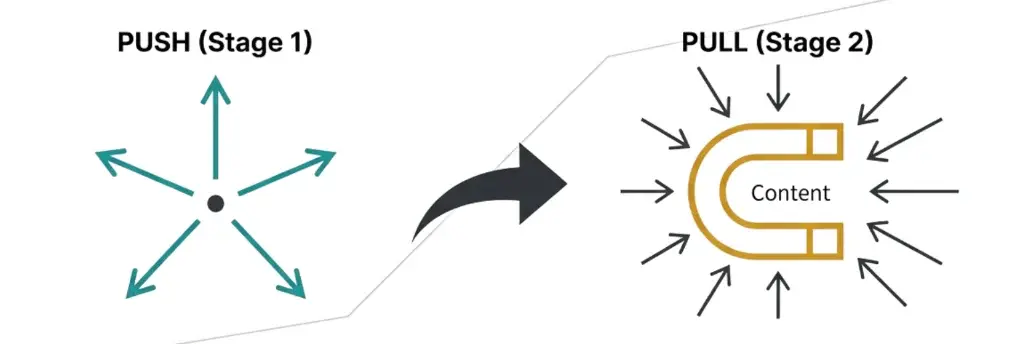
This is where I see a lot of founders hit a wall. Manual outreach starts to feel like a chore, and referral growth often slows down. This is the signal to switch to “Incoming Acquisition”. Instead of chasing users, you want them to find you through content and “building in public”.
I’ve seen founders find great success by focusing on searchable platforms like YouTube and SEO-heavy blog posts, while using LinkedIn or Indie Hackers to share the behind-the-scenes journey of their company. I’ll be honest: this stage is slow and painful. You’ll likely put out dozens of posts that don’t convert a single user.
But it’s worth it because it compounds over time, eventually bringing in high-intent users without you having to manually send a single DM. A good rule of thumb I’ve observed is to let your existing revenue fund this content production until you reach roughly 500 users.
The Rocket Fuel: Aggressive Scaling (1,000+ Users)
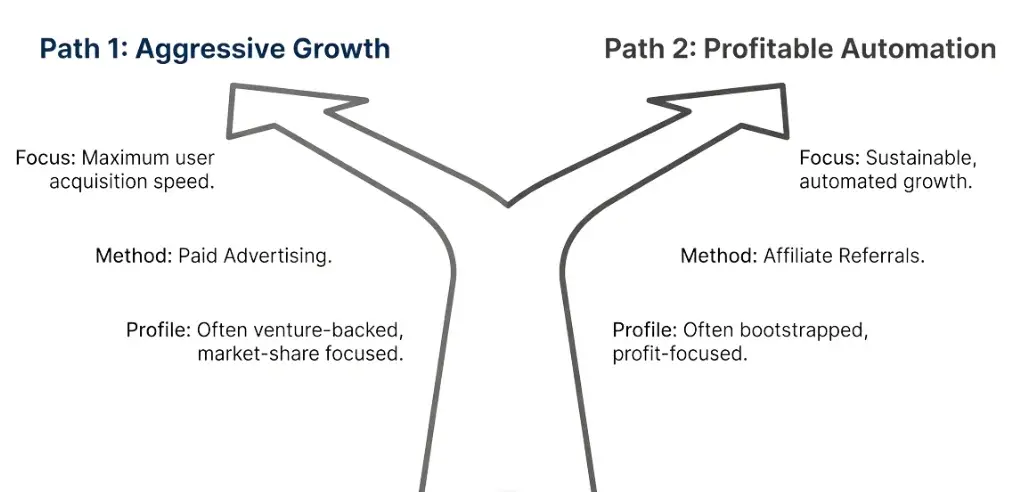
Once you cross that 1,000-user mark, you’ve proven you have traction, and it’s time to choose your path: do you want to reinvest everything for aggressive growth, or focus on a profitable, automated system?
At this point, you layer on two high-powered models:
1. Paid Advertising: Don’t guess what will work. Take the organic content that performed best during Stage 2 and turn it into paid ads on Google, Meta, or TikTok. If you are looking for profit, I’ve seen founders target a 3:1 Return on Ad Spend (ROAS), meaning every $1 spent brings in $3 in revenue.
2. Affiliate Programs: This is where you open the doors to the public. By offering a recurring revenue share of 10–50%, you can get influencers and partners to do the selling for you. Higher payouts usually lead to faster growth, while lower payouts help you keep the business more automated and profitable.
Ultimately, user acquisition is a shifting landscape. Your early users are your foundation, but content, ads, and affiliates are the tools that turn that hard-earned traction into exponential growth